
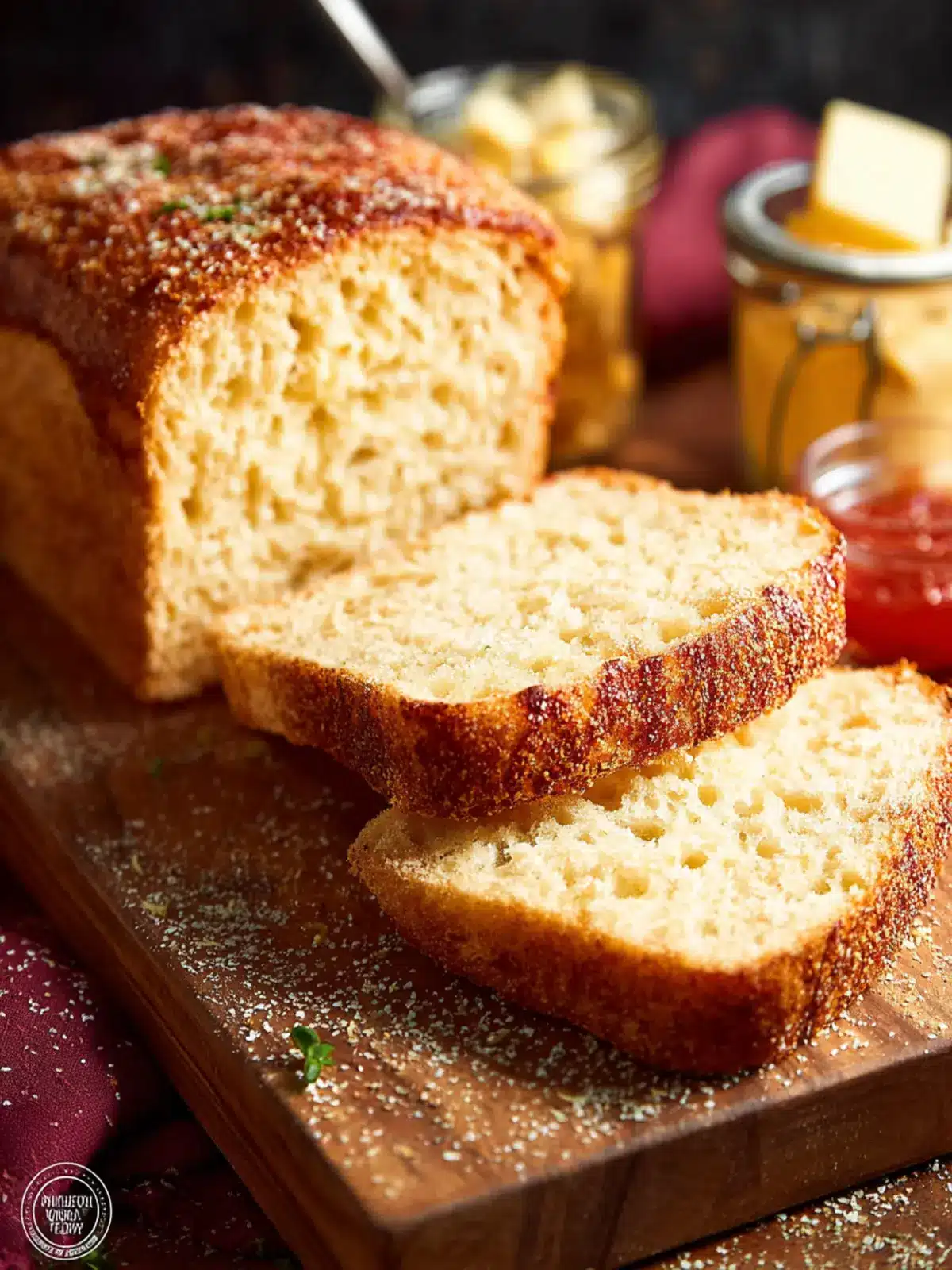
Introduction to English Muffin Bread That Makes the Perfect Toast
Imagine waking up to the tantalizing aroma of freshly baked English muffin bread wafting through your home. It’s a comfort that brings back fond memories of lazy Sunday mornings spent savoring crispy, golden slices topped with butter and jam. This recipe not only allows you to create that delightful English muffin bread at home but transforms your breakfast into a gourmet experience, proving that simple ingredients can yield extraordinary results.
Why English Muffin Bread is a Game Changer?
So, what makes English muffin bread such a standout in the kitchen? First off, it’s incredibly versatile. Whether you enjoy it toasted with a smear of creamy avocado or piled high with your favorite breakfast sandwich ingredients, English muffin bread is a blank canvas just waiting for your culinary creativity.
Perfect Texture: The unique texture of English muffin bread features those iconic nooks and crannies, thanks to an easy baking process that ensures that every slice has the ideal density for holding spreads without falling apart.
Ease of Preparation: Unlike traditional English muffins that require a fair bit of fuss on a griddle, this bread rises beautifully in the oven. You simply mix your ingredients, let the dough rise, and then bake—making it accessible even for novice bakers or those with busy schedules.
Healthier Option: Since you’re in control of the ingredients, you can easily adapt this recipe to fit your dietary preferences—whether that’s opting for whole-grain flour or reducing sugar.
Moreover, imagine sharing this loaf with friends and family. Picture a cozy gathering where homemade English muffin bread serves as the star of the brunch spread, inviting lively conversation over bites of toasty deliciousness.
In the world of bread, this recipe stands out by encapsulating the essence of comfort and warmth, while being a breeze to make. Get ready to elevate your breakfast game with a loaf that not only toasts beautifully but also tells a story of culinary triumph!
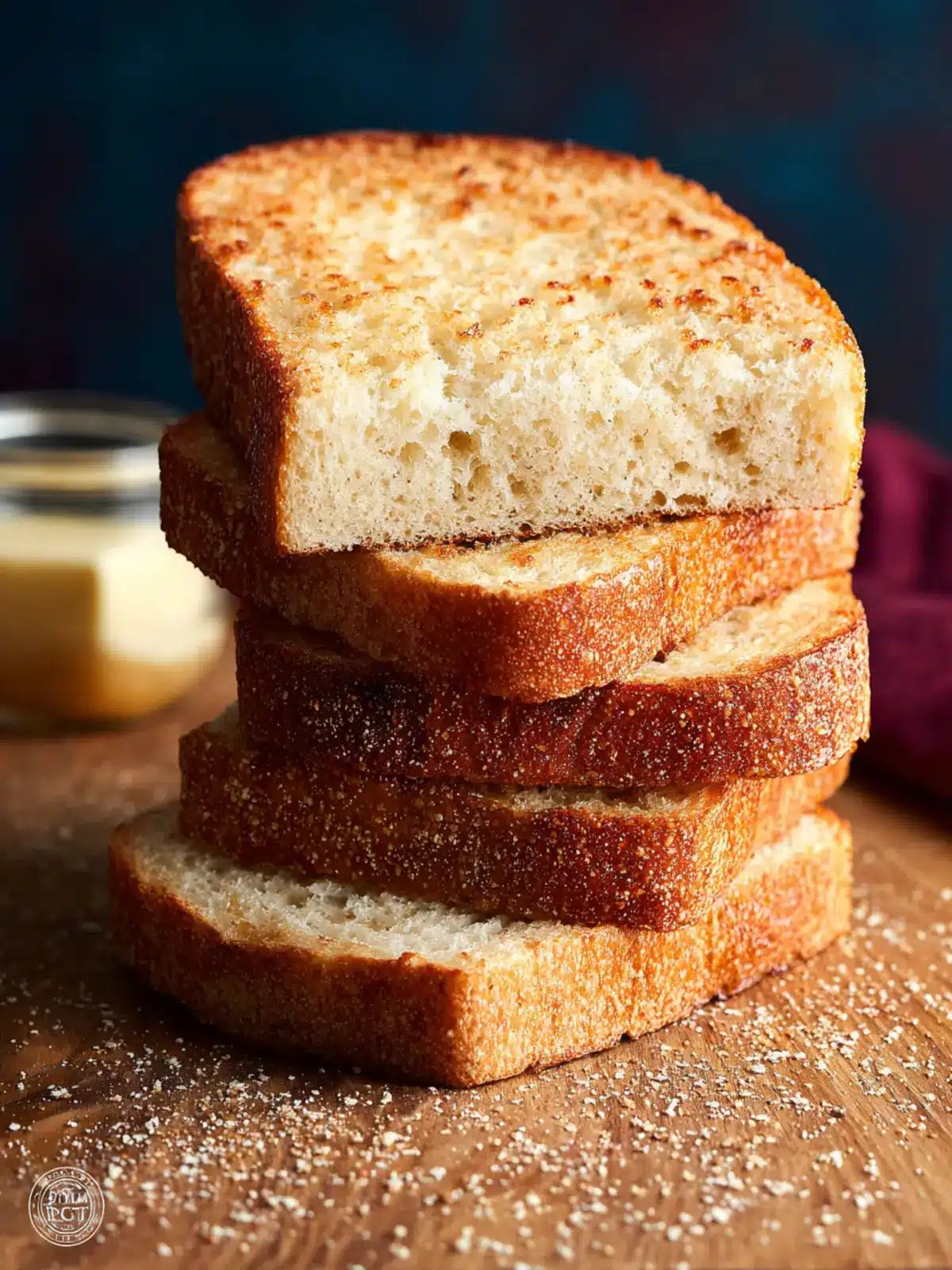
Key Ingredients for English Muffin Bread
Creating the perfect English muffin bread is all about selecting the right ingredients that will give you that signature texture and flavor. Each component plays a vital role, ensuring your bread is both delicious and satisfying.
Flour: I recommend using all-purpose flour for this recipe. The right amount of protein in all-purpose flour contributes to the bread’s hearty structure while keeping it soft and chewy.
Yeast: For a delightful rise, active dry yeast works wonders. It’s essential to activate the yeast properly; I always let it froth in warm water with a touch of sugar to ensure it’s alive and kicking before incorporating it into the dough.
Milk: Using whole milk adds a creamy richness that enhances the overall flavor. You can also substitute it with almond or oat milk if you’re looking for a dairy-free option.
Sugar: Just a bit of granulated sugar rounds out the flavor. It supports the yeast during proofing, giving your bread that perfect rise and a hint of sweetness.
Salt: Don’t overlook salt; it’s crucial for balancing flavors and controlling yeast growth, which is vital for achieving the right consistency.
Butter: A little melted butter adds moisture and flavor to your English muffin bread, making the crust rich and inviting.
Each ingredient complements the others, transforming simple components into a delightful loaf that’s perfect for toasting and slathering with your favorite toppings.
Why You’ll Love This Recipe
The moment you experience the warm, golden crust of English muffin bread right out of the oven, you’ll understand why this recipe holds a special place in the hearts of breakfast lovers like us. There’s something magical about the soft, airy texture combined with those perfectly toasted nooks and crannies that are tailor-made for holding butter, jam, or any spread of your choice.
The Benefits of Homemade Toast
Making your own English muffin bread means you’re not just baking; you’re crafting a delightful morning ritual. Here are a few reasons why you’ll absolutely love this recipe:
- Fresh Ingredients: You control what goes into your bread. No preservatives, no mystery ingredients—just wholesome components you can trust.
- Versatile Flavor: Whether you like it sweet with a drizzle of honey or savory topped with smashed avocado and poached eggs, each slice invites creative toppings that suit your taste.
- Effortless Preparation: The straightforward, no-knead method makes it accessible, even for those juggling busy schedules.
Imagine waking up to a kitchen filled with the aroma of freshly baked bread. This English muffin bread recipe transforms your breakfast from ordinary to extraordinary, offering you a treat that’s nourishing and delicious every single time.
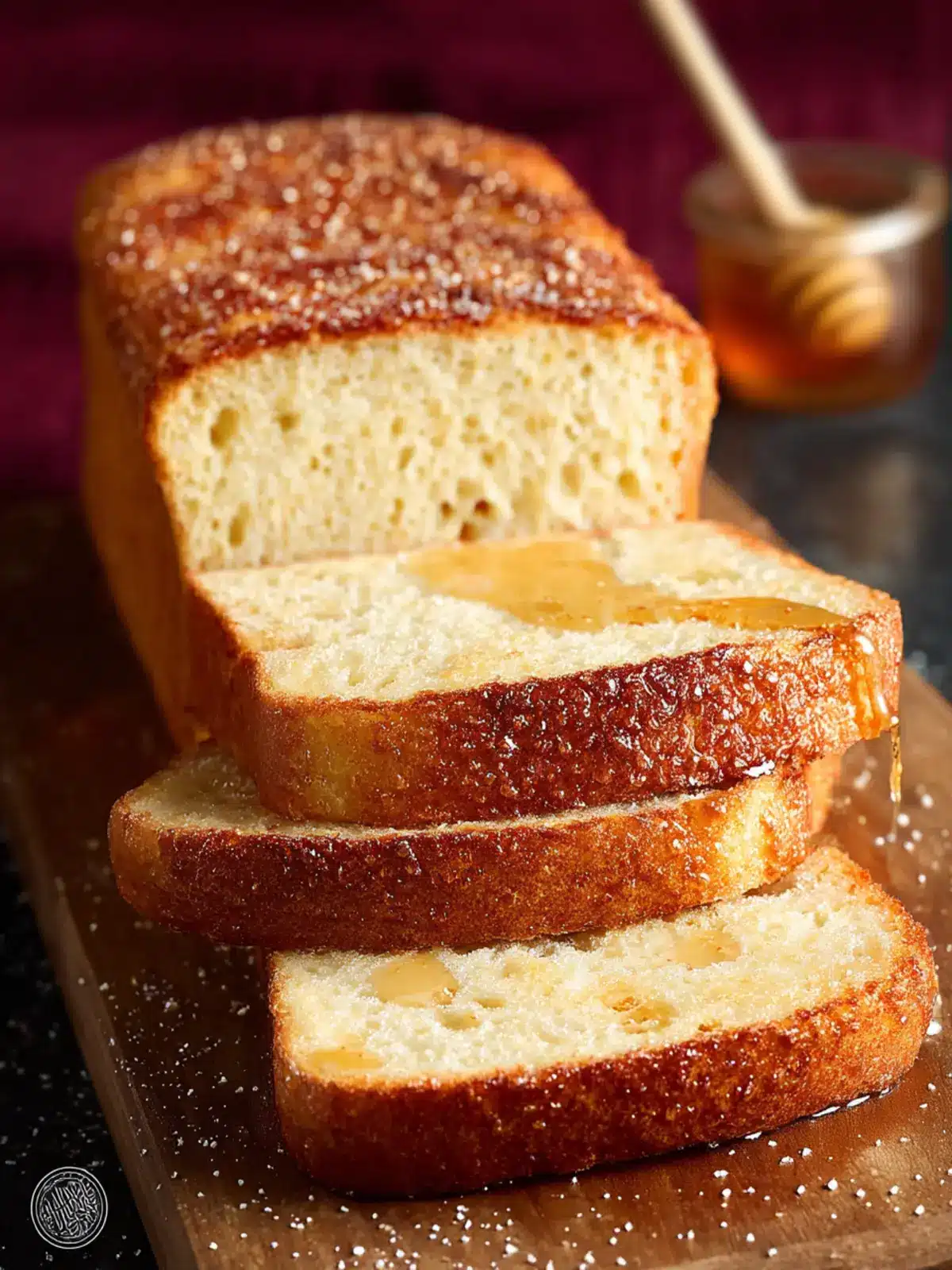
Variations to Try
The English muffin bread recipe doesn’t just taste great on its own; it’s a fantastic canvas for creative flavors! Whether you’re in the mood for something savory or sweet, small tweaks can elevate your loaf to a whole new level.
Add-Ins and Flavor Twists
Herbs and Cheese: Infusing your dough with herbs, like rosemary or thyme, opens up a world of flavors. Add grated cheese, such as sharp cheddar or feta, for a savory kick that pairs beautifully with breakfast eggs.
Nuts and Seeds: Toss in some chopped walnuts or sunflower seeds for a delightful crunch. This adds texture while enriching the bread with healthy fats and proteins.
Dried Fruit: For a sweet twist, incorporate dried cranberries or apricots. These fruity additions create a lovely contrast when you toast your English muffin bread and spread on some cream cheese or butter.
Spices: A dash of cinnamon or nutmeg can surprise your taste buds, especially when paired with a bit of honey or maple syrup on your toasted slices.
Citrus Zest: A hint of lemon or orange zest can brighten the flavor profile, making your English muffin bread an uplifting addition to any breakfast table.
Experimenting with these variations not only keeps your toasting routine fresh but also makes baking a delightful adventure!
Cooking Tips and Notes
When diving into the world of English muffin bread, there’s nothing quite like the aroma of freshly baked loaves filling your kitchen. Creating the perfect toast goes beyond just following a recipe; it’s about understanding the ingredients and techniques that lead to that wonderfully crispy, chewy slice.
Common Mistakes to Avoid
To ensure your English muffin bread turns out just right, here are some common pitfalls to sidestep:
Using old yeast: Fresh yeast is crucial for a good rise. Always check the expiration date before you start baking. If your dough doesn’t rise, your bread will be dense and lack that signature texture.
Skipping the kneading: Kneading helps develop gluten, which gives your bread structure. Don’t rush this step; a good 10 minutes can make all the difference in the final product.
Incorrect oven temperature: Every oven is different. Invest in an oven thermometer to make sure your baking temperature is accurate. If it’s too hot or too cool, your English muffin bread won’t brown or rise properly.
Overbaking or underbaking: Keep an eye on your bread towards the end of the baking time. A golden brown crust is the perfect sign, but pulling it out too early can lead to a gummy center.
Not letting it cool completely: While it’s tempting to slice into your warm loaf right out of the oven, allowing the bread to cool helps it set and improves flavor. Slice when it’s cool for the best results!
By keeping these tips in mind, you’re well on your way to mastering your English muffin bread recipe and making toast that’ll impress anyone at your breakfast table.
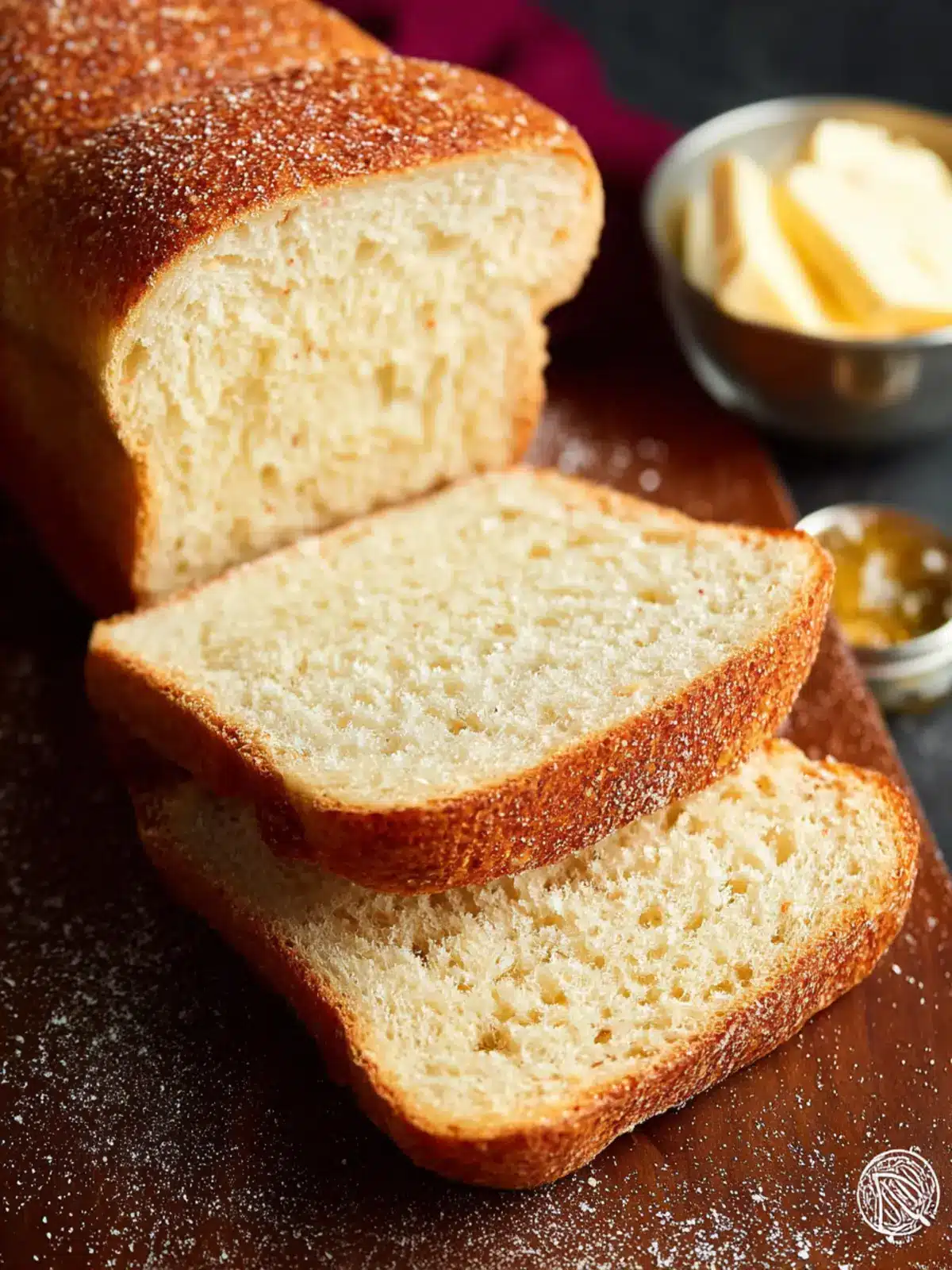
Serving Suggestions
Creating the perfect toast starts with English Muffin Bread, and it doesn’t stop there! Elevate your breakfast or snack time by experimenting with a variety of delicious toppings that complement the bread’s flavor and texture.
Pairing Your Bread with Delicious Toppings
Avocado Spread: Mashed avocado with a squeeze of lime creates a creamy topping that’s rich in flavor and healthy fats. Add a sprinkle of salt for an extra kick.
Classic Peanut Butter: Spread a generous layer of peanut butter and sprinkle some chia seeds on top for added crunch and nutrition. Perfect for a quick protein boost!
Sweet & Savory: Top your toast with ricotta cheese drizzled with honey and a sprinkle of crushed walnuts. This combo offers a delightful mix of textures and flavors.
Breakfast Delight: Use a slice of English Muffin Bread as a base for poached eggs and sautéed greens. It makes for a filling and nutritious breakfast option.
Fruit and Jam: Slather your toast with your favorite fruit jam or fresh fruit slices, such as strawberries or peaches. The sweetness pairs beautifully with the lightly toasted bread.
With these ideas, your English Muffin Bread will never be boring!
Time Breakdown for English Muffin Bread
Creating the perfect english muffin bread is an experience that deserves attention to timing. Here’s how the hours stack up to bring this delicious loaf to life.
Preparation Time
To get started, allow about 15 minutes for preparation. This includes mixing your ingredients and getting everything ready for the rising stage.
Rising Time
Next comes the magic of fermentation. The dough needs to rise for about 1 hour. This is when it transforms into a wonderfully airy base, full of flavor.
Baking Time
Once risen, bake your loaf for around 30 minutes. Keep an eye on it, and trust your nose; when it smells divine, it’s likely done!
Total Time
From start to finish, expect the entire process to take around 1 hour and 45 minutes. A small investment of time for a loaf of fresh, homemade english muffin bread that’s perfect for toasting!
Nutritional Facts for English Muffin Bread
Creating the perfect English muffin bread not only satisfies your taste buds but also brings a range of nutritional benefits to your breakfast table. Let’s break down the essential nutritional facts that make this delicious bread a wholesome choice.
Calories
A slice of homemade English muffin bread typically contains around 120 calories. This makes it a satisfying yet light option, whether you’re toasting it for breakfast or enjoying it with your favorite toppings.
Macronutrients
This delightful bread is packed with macronutrients:
- Carbohydrates: Approximately 25g per slice, providing a quick source of energy.
- Protein: Roughly 5g, essential for muscle repair and growth.
- Fat: About 1g, keeping it on the lighter side while still offering some satiety.
Dietary Fiber
Each slice of your English muffin bread offers about 2g of dietary fiber. Fiber is crucial for digestive health, helping to keep you feeling full longer while aiding in regularity. It’s a smart addition to any balanced diet, particularly if you’re looking to enhance your morning routine.
Incorporate this nutritious option into your breakfast, and you’ll enjoy not just the taste, but also the benefits that come with it!
FAQs About English Muffin Bread
When diving into the world of English muffin bread, you might find yourself with a few questions. Don’t fret; I’m here to guide you through the most common inquiries to ensure your baking adventure is smooth and successful!
How do I achieve the perfect crust?
To get that delightful, chewy crust reminiscent of traditional English muffins, consider baking your bread at a higher temperature, around 425°F (220°C). Using a baking stone or placing a pan of water in the oven can also help create steam, which contributes to a great crust. Don’t skimp on letting the dough rise; it should double in size for the best texture. Finally, try brushing the loaf with melted butter right after it comes out of the oven for an extra touch of flavor and moisture.
Can I use my bread machine for this recipe?
Absolutely! Using a bread machine can simplify the process of making English muffin bread. Just follow the recipe and add the ingredients in the order specified by your bread machine. Most machines have a “quick bread” setting that works perfectly for this type of batter. However, keep an eye on the dough’s consistency; it should be thick and doughy rather than a pourable batter.
How to store leftover bread?
To keep your English muffin bread fresh, store it in an airtight container at room temperature for up to three days. If you know you won’t finish it within that time, slice and freeze the bread. It defrosts beautifully and can be toasted directly from the freezer, making busy mornings so much easier!
Conclusion on English Muffin Bread That Makes the Perfect Toast
In the delightful world of breakfasts, nothing beats english muffin bread when it comes to creating the ideal toast. This versatile bread not only gives you that beloved English muffin texture but also transforms your morning routine into something special. Imagine slicing through the crisp crust to reveal a soft, airy interior—perfect for holding onto all that buttery goodness and your favorite toppings. Whether you enjoy it simply buttered, with a drizzle of honey, or dressed up with a poached egg, this bread elevates every meal. Embrace the delightful crunch and tantalizing flavor of homemade english muffin bread and watch your toast game soar.
Print
Homemade Bread
- Total Time: 1 hour 40 minutes
- Yield: 1 loaf 1x
- Diet: Vegetarian
Description
This homemade bread recipe yields a soft and slightly sweet loaf that is perfect for sandwiches or toast.
Ingredients
- ¾ cup whole milk (heated to 110°F (43°C))
- ½ cup water (heated to 110°F (43°C))
- 1 tablespoon unsalted butter (melted)
- 1 tablespoon honey (or granulated sugar)
- 1½ teaspoons table salt
- 3 cups all-purpose flour (or bread flour for a sturdier loaf)
- ⅛ teaspoon baking soda
- 1 teaspoon instant yeast
- 2 tablespoons cornmeal (for oven version only)
Instructions
- In a large mixing bowl, whisk together the flour, baking soda, yeast, and salt.
- Add the warm milk, warm water, honey, and melted butter.
- Mix with a Danish dough whisk or wooden spoon for 3 minutes, until the dough becomes slightly smooth but remains shaggy. Alternatively, mix with a stand mixer fitted with a dough hook on high speed for 2 minutes.
- Grease an 8 ×4 inch (22×11 cm) loaf pan and sprinkle the bottom and sides with 2 tablespoons of the cornmeal.
- Transfer the dough into the prepared pan and smooth the top if needed. Loosely cover with greased plastic wrap.
- Let the dough rise in a warm spot for 1 hour or until the dough reaches the top edge of the pan.
- Preheat the oven to 400°F (200°C). Bake the loaf for 25 minutes or until golden brown and the internal temperature reaches 190°F (88°C).
- Remove from the oven and let cool in the pan for 10 minutes. Then transfer to a wire rack to cool completely before slicing.
- Omit the cornmeal.
- To the bread pan, add the following ingredients in this order: warm milk, warm water, melted butter, honey, salt, flour, baking soda, and yeast.
- Insert the bread pan into the machine and make sure it is secured. Close the lid and plug in the machine.
- Select the basic bread setting, loaf size (small, or 1 lb), and preferred crust color (light, medium, or dark). Start the cycle.
- If you are nearby after the kneading stage and before the dough begins to rise, open the lid and smooth the top of the dough with a damp spatula or clean fingers. This helps avoid an uneven or lopsided loaf, which can happen if the dough is stuck to one side of the pan.
- Once the baking cycle ends, unplug the machine. Wearing kitchen mittens, carefully remove the bread pan and allow it to cool for 10 minutes.
- Turn the loaf out onto a wire rack and let it cool completely before slicing. If the paddle remains in the loaf, gently remove it.
Notes
- This bread can be used for sandwiches or served with butter and jam.
- Store leftover bread in an airtight container for up to 3 days.
- Prep Time: 15 minutes
- Cook Time: 25 minutes
- Category: Bread
- Method: Baking
- Cuisine: American
Nutrition
- Serving Size: 1 slice
